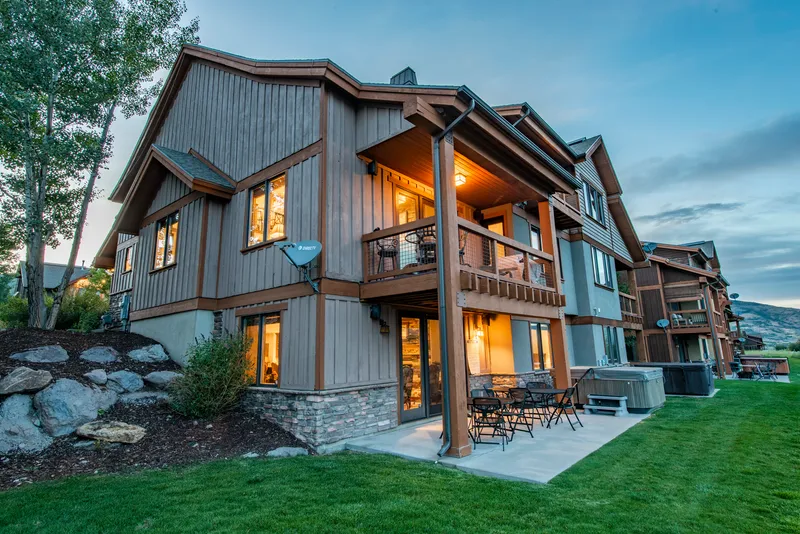


Park City vacation rental pricing strategy: understanding compression vs substitution
Most Park City owners don’t have a pricing problem.
They’re applying the wrong pricing strategy to the wrong type of property.
A Park City vacation rental pricing strategy only works if you understand one thing:
Not all demand creates pricing power.
Throughout Deer Valley, Old Town, Canyons Village, and Jordanelle, your revenue outcome depends on whether your property operates in:
• A compression-driven market
• A substitution-driven market
This distinction determines whether you can:
• Hold rates and capture premium ADR
• Or compete against interchangeable inventory
Most owners don’t recognize which market they’re in.
That’s where $50K–$120K in annual revenue is lost.
The decision that defines your pricing strategy
Every high-performing property answers this correctly:
When demand increases, do guests compete for your property—or simply choose another similar option?
If your home is:
• Scarce
• Differentiated
• Hard to replace
→ You benefit from compression
If your home is:
• Similar to nearby inventory
• Easily replaceable
• One of many options
→ You are exposed to substitution
Why Park City demand now requires real-time interpretation
Park City demand is driven by:
• Winter ski season (December–March)
• Holiday travel windows
• Snow-driven booking surges
• Summer outdoor tourism
• Luxury second-home usage
But one major shift has changed pricing strategy:
Park City no longer has a single, predictable demand spike that guarantees compression.
Without that artificial surge, pricing success now depends on:
• Real-time supply reduction
• Property-level differentiation
• Submarket-specific demand behavior
This makes compression conditional—not guaranteed.
Compression vs substitution: the two markets operating at once
Compression-driven demand
• Limited inventory
• Unique or scarce properties
• Rapid supply reduction inside 30 days
→ Prices rise aggressively
Substitution-driven demand
• High inventory concentration
• Similar unit types
• Stable or slowly declining supply
→ Prices stabilize or decline
→ Often creates false signals of demand strength (phantom compression)
The Compression vs Substitution Index (practical framework)
Evaluate your property across three dimensions:
1. Inventory scarcity
• Few comparable listings → compression
• Many similar listings → substitution
2. Property differentiation
• Ski-in/ski-out, luxury finishes, large size → compression
• Standard layouts, shared amenities → substitution
3. Demand urgency
• Fixed travel windows (holidays, peak ski weeks) → compression
• Flexible leisure travel → substitution
Interpreting your position
• High scarcity + high differentiation → Compression-dominant
• Low scarcity + high similarity → Substitution-dominant
Most properties clearly skew one direction—even if owners assume otherwise.
A quick self-assessment: Where your property actually sits—and why it matters
Answer the following:
• Are there 5+ nearly identical listings within your immediate area?
• Does your property have true ski-in/ski-out access or prime walkability?
• Are comparable listings still widely available inside 21 days?
• Do you typically book 70%+ of peak dates more than 45 days in advance?
• Do you reduce pricing inside 14–21 days to fill gaps?
Interpreting your answers
• Mostly “yes” to availability + early bookings
→ Substitution-dominant profile
• Mostly “yes” to scarcity + late demand
→ Compression-dominant profile
This classification determines your pricing ceiling.
How this plays out across Park City submarkets
Deer Valley: compression-dominant market
• Limited luxury inventory
• Ski-in/ski-out scarcity
• High-end guest demand
→ Strong late-stage pricing power
Typical revenue:
• $250K–$600K+ annually
Old Town: hybrid compression and substitution
• Walkability drives demand
• Mix of unique homes and similar units
→ Strategy depends on property-specific differentiation
Typical revenue:
• $120K–$250K annually
Canyons Village: substitution-driven market
• High density of similar condos
• Guests compare options directly
→ Pricing power constrained by competition
Typical revenue:
• $70K–$150K annually
Jordanelle / Deer Valley East : emerging substitution pressure
• Rapid new development
• Increasing inventory
• Demand still maturing
→ Compression is inconsistent and highly conditional
Seasonality: when compression actually forms
Peak winter (December–March)
• Highest ADR potential
• Compression depends on snow + inventory reduction
• Ski access becomes decisive
Holiday periods (Christmas / New Year, Presidents’ Week)
• Fixed travel windows
• Strongest compression likelihood
• Premium pricing achievable
Summer
• Strong occupancy
• Lower ADR ceiling
• More substitution behavior
Shoulder seasons
• Price-sensitive demand
• Minimal compression
• Strategy must shift toward occupancy
The revenue equation, and why strategy must match property type
Revenue = ADR \times Occupancy \times Nights
Compression-dominant properties
• ADR drives revenue
• Occupancy follows
Substitution-dominant properties
• Occupancy drives revenue
• ADR is capped
A real-world contrast: same market, different outcomes
• Deer Valley 5-bedroom ski-in/ski-out home
→ Holds inventory into peak window
→ $4,000+ ADR during compression
→ ~$450K–$550K annual performance
• Canyons Village 2-bedroom condo
→ Holds too long expecting compression
→ Forced to discount inside 14 days
→ $85K–$110K vs ~$120K potential
Same market conditions.
Different outcomes based on:
→ compression vs substitution alignment
Where most properties lose 20–40% of revenue
Misalignment between strategy and property type:
• Compression property sold too early → missed ADR upside
• Substitution property held too long → late-stage discounting
Result:
→ 20–40% revenue loss annually
Why most managers underperform in this model
Most managers optimize for:
• Booking pace
• Occupancy stability
• Predictable calendars
They do not optimize for:
• Real-time inventory behavior
• Submarket compression dynamics
• Property-specific pricing strategy
This creates consistent performance gaps.
How to identify real vs phantom compression in real time
Inside 30 days, ignore your bookings.
Watch the market:
• Listings disappearing rapidly
→ Real compression
• Listings sitting with price reductions
→ Substitution (phantom compression)
This is the most important pricing signal in Park City.
Frequently asked questions about Park City pricing strategy
What is compression in vacation rental pricing?
A rapid reduction in available inventory that increases pricing power.
What is substitution?
When guests can easily choose between similar properties, limiting ADR growth.
Which Park City areas have the strongest pricing power?
Deer Valley and select Old Town properties.
Do condos experience compression?
Less consistently, most operate in substitution-driven markets.
Should I always hold for higher rates?
Only if your property shows real compression signals.
Related Park City owner insights
• Park City vacation rental pricing strategy breakdown
• Deer Valley vs Old Town income comparison
• How much your Park City rental should earn
• Choosing the right Park City property manager
The real takeaway for Park City owners
Your pricing strategy is not about reacting to demand.
It is about correctly identifying:
Are you operating in a compression market—or a substitution market?
Because in Park City:
• Compression creates pricing power
• Substitution limits it
And the difference between the two is often:
→ $50K–$120K in annual revenue